Night Sweats While Sleeping? Causes, Triggers, and How Your Bedding Impacts Body Temperature
Waking up drenched in sweat—even when the room doesn’t feel hot—can be uncomfortable, disruptive, and frustrating. If you’re constantly changing pajamas or sheets in the middle of the night, you’re not alone.
Night sweats are common, and while they’re often linked to hormones, stress, or health conditions, your sleep environment—especially your bedding—plays a much bigger role than most people realize.
Below, we’ll break down what night sweats really are, why they happen, and how choosing the right bedding can help your body regulate temperature more effectively while you sleep.
What Are Night Sweats?
Night sweats go beyond simply feeling warm at night. They involve excessive perspiration that can soak through sheets and clothing, even when the room temperature is cool [4].
They’re commonly associated with:
-
Menopause and perimenopause
-
Anxiety and chronic stress
-
Certain medications, including antidepressants and steroids
-
Infections and fevers
-
Hormonal or metabolic conditions [3][4]
If night sweats are frequent, unexplained, or accompanied by symptoms like weight loss, fever, or fatigue, it’s important to consult a healthcare provider [4].
Why the Body Sweats at Night
Your body relies on a complex internal system to regulate temperature—especially while you sleep.
During sleep:
-
Core body temperature naturally drops
-
Blood vessels dilate to release heat
-
Hormonal signals help maintain balance
However, when this system becomes overstimulated—due to stress, hormonal fluctuations, illness, or external heat—your body may release excess heat in the form of sweat [5].
This is where your bedding can either support or disrupt the process.
How Bedding Can Trigger or Worsen Night Sweats
Even if your bedroom is set to the ideal sleep temperature (about 65°F), your sheets and mattress materials can significantly affect how heat and moisture are managed overnight [3].
Heat-Retaining Fabrics
Traditional cotton and synthetic sheets often:
-
Retain body heat
-
Absorb moisture without releasing it
-
Create a warm, humid micro-environment next to the skin
Once moisture becomes trapped, your body struggles to cool down—leading to more frequent or intense night sweats [3].
Limited Breathability
Tightly woven or low-quality fabrics restrict airflow, which can:
-
Increase heat buildup
-
Interrupt sleep cycles
-
Cause restlessness and frequent waking
Why Bamboo Viscose Sheets Are Better for Hot Sleepers
Bamboo viscose is widely recommended for people who struggle with night sweats because of its unique structure and performance.
Naturally Thermo-Regulating
Bamboo fibers allow excess heat to escape while helping maintain a more consistent sleep temperature throughout the night.
Moisture-Wicking
Rather than trapping sweat, bamboo viscose draws moisture away from the body, helping you stay dry and more comfortable as you sleep.
Lightweight & Breathable
The fabric promotes airflow, reducing heat buildup and that “stuffy” sensation common with traditional bedding.
Gentle on Sensitive Skin
Bamboo viscose is smooth, soft, and naturally resistant to common non-living allergens, making it ideal for sensitive sleepers [1][2].
Our Favorite Cooling Sheet Options for Night Sweats
100% Bamboo Bed Sheets
Once you understand how night sweats happen—and how breathability and moisture control affect temperature regulation—the right sheets become a powerful part of the solution.
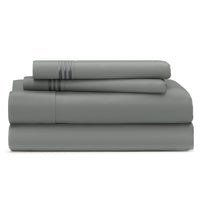
Cosy House 100% Bamboo Bed Sheets are designed to support your body’s natural cooling process throughout the night. Instead of trapping heat or holding onto moisture, they help maintain a more balanced sleep environment that stays cool, dry, and comfortable as your body moves through its normal temperature cycles.
Key features include:
-
Made from pure bamboo viscose
-
Smooth, lightweight feel that won’t weigh you down
-
Gentle on sensitive skin
-
Deep pockets with a secure 360° elastic fit
-
Machine washable and dryer friendly
If night sweats are disrupting your sleep, these sheets are built to work with your body—not against it—so you can rest more comfortably from bedtime to morning.
Pro Tip: Don’t Forget Your Mattress Protector
If you experience night sweats, your mattress plays a role too.
This Luxury Mattress Protector can:
-
Reduce moisture buildup
-
Protect against sweat, spills, and stains
-
Help maintain a cleaner, cooler sleep surface
For hot sleepers, this added layer can make a noticeable difference in overnight comfort.
Why Cosy House Loves Bamboo: The Three Cs
Care
Bamboo is one of the fastest-growing renewable resources available and uses significantly less water than cotton. It also produces more oxygen and helps reduce soil erosion [1][2].
Comfort
Viscose derived from bamboo is lightweight, breathable, and gentle on skin—ideal for nightly use and temperature-sensitive sleepers.
Cost
Bamboo viscose offers premium performance at a more accessible price point than many traditional luxury bedding materials.
Did You Know? Interesting Facts About Night Sweats
Night sweats are more common (and more complex) than many people realize:
-
Both men and women experience night sweats, often for similar reasons, though they’re reported more frequently in women [3][4].
-
Menopause is one of the most well-known causes, but night sweats can begin years before menopause actually starts [3].
-
There are multiple treatment approaches available, including cognitive behavioral therapy (CBT), medications, and lifestyle or emotional support strategies, depending on the underlying cause [3][4].
-
Sleep disorders like obstructive sleep apnea (OSA) are also linked to night sweats. OSA affects an estimated 3% to 7% of Americans, and men are 3 to 5 times more likely to develop it than women due to differences in airway anatomy, obesity rates, and hormone levels [6].
Because night sweats can stem from many different factors, identifying patterns—and knowing when to seek medical guidance—can be an important step toward better sleep.
When to Talk to a Doctor
You should consult a healthcare provider if your night sweats:
-
Occur regularly
-
Wake you from sleep
-
Are accompanied by fever, unexplained weight loss, cough, or other symptoms [4]
A medical professional can help determine whether night sweats are related to bedding, lifestyle factors, or an underlying condition.
FAQs: Night Sweats at a Glance
Q: What are night sweats?
A: Night sweats are episodes of excessive sweating during sleep that may soak your sheets or sleepwear and can wake you up [3][4].
Q: What’s the most common cause?
A: Hormonal changes (such as menopause), anxiety, infections, medications, and overheating during sleep are among the most common triggers [3].
Q: Can bed sheets really make night sweats worse?
A: Yes. Sheets that trap heat and moisture can interfere with your body’s natural cooling process and increase nighttime sweating [3].
Q: What helps reduce night sweats naturally?
A: A cooler room temperature (around 65°F), breathable bedding, moisture-wicking fabrics, and proper airflow all support healthier temperature regulation during sleep [3].
Sleep Cooler, Sleep Better
Night sweats don’t have to dictate how well you sleep. While health factors can contribute, your bedding is one of the simplest and most effective places to start.
By choosing breathable, moisture-wicking materials and creating a cooler sleep environment, you can support your body’s natural temperature regulation—and wake up feeling more rested and refreshed.
Use code BLOG10 and enjoy 10% off our full collection of sleep essentials to build a bed that truly works for you. Stay Cosy 🌙
Resources:
-
Wikimedia Foundation. (2022, May 24). Bamboo. Wikipedia. Retrieved from https://en.wikipedia.org/wiki/Bamboo.
-
Shrujal Jayesh Kumar, B., & Syeda, A. (2014, December). A case study on bamboo as a green building material. ISSN: 2249 – 8958, Volume-4 Issue-2. Retrieved from https://internationalgbc.org/wp-content/uploads/2021/06/0165_10.1.1.678.7429.pdf.
-
Causes of night sweats. Sleep Foundation. (2023, February 13). https://www.sleepfoundation.org/night-sweats/causes-of-night-sweats
-
Mayo Foundation for Medical Education and Research. (2022, March 5). Night sweats. Mayo Clinic. https://www.mayoclinic.org/symptoms/night-sweats/basics/definition/sym-20050768
-
Tan CL, Knight ZA. Regulation of Body Temperature by the Nervous System. Neuron. 2018 Apr 4;98(1):31-48. doi: 10.1016/j.neuron.2018.02.022. PMID: 29621489; PMCID: PMC6034117. https://www.ncbi.nlm.nih.gov/pmc/articles/PMC6034117/
-
Causes of night sweats in men. Sleep Foundation. (2023a, April 6). https://www.sleepfoundation.org/night-sweats/men